হিসাব কাউন্টার (Hisab Counter)
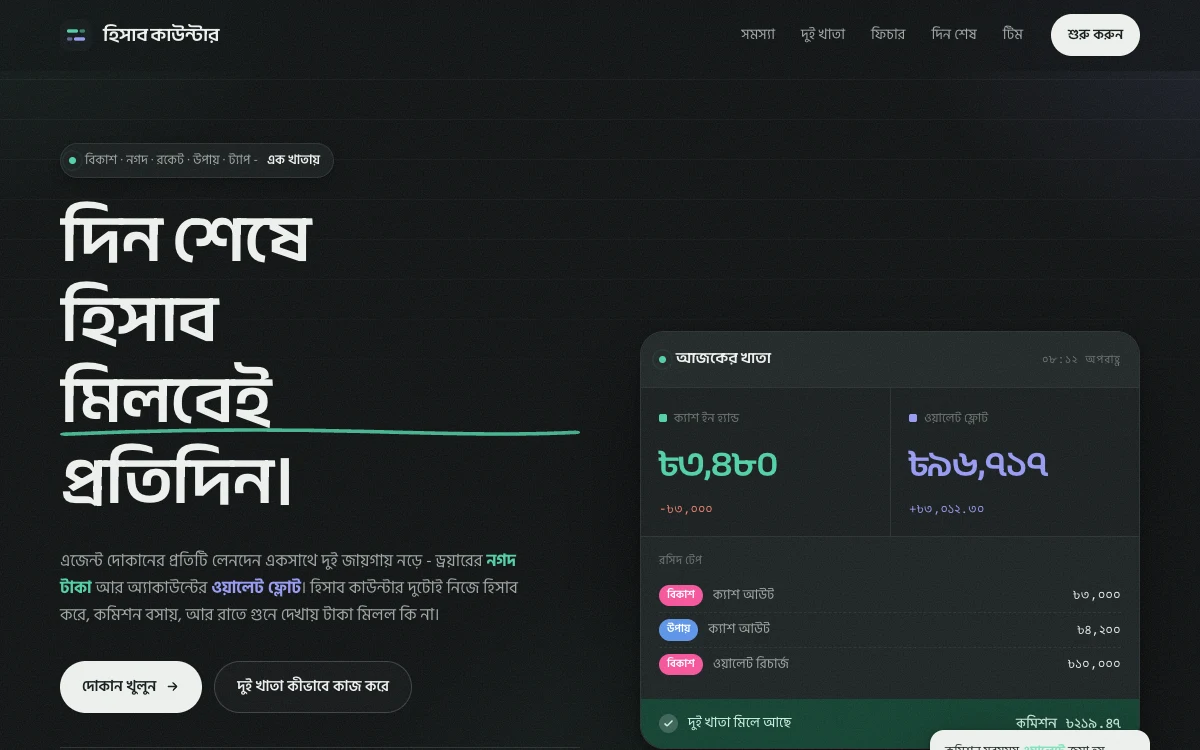
A Bengali double-ledger accounting app for mobile financial service agent shops in Bangladesh. Every transaction moves the cash drawer and the wallet float at once, commission is applied per provider, and the day closes on a counted-cash variance check.
What the work involved
An agent shop in Bangladesh sells bKash, Nagad, Rocket, Upay and Tap from the same counter, and every transaction moves money in two places at once: the cash in the drawer and the wallet float in the agent account. A cash-out takes notes out of the drawer and puts balance into the wallet. A wallet recharge does the reverse. Commission lands in the wallet, never in the drawer. Get any of that backwards and the two books stop agreeing, which is only discovered at eleven at night when the cash does not add up.
The shops that run on a spreadsheet feel this most. A single wrong drag breaks a formula silently, a phone is a bad place to edit a workbook, and by the time a month is corrupted there is no way to find where it went wrong. This replaces that: one entry screen, both ledgers recomputed from scratch on every save, and a receipt tape that prints exactly what the entry did to each of them.
The rules are the product. Commission rates are versioned, so changing a provider rate today does not rewrite what yesterday earned. Transactions that cannot physically happen are refused at entry with the reason and the fix, rather than accepted and reconciled later — paying out more cash than the drawer holds is not a rounding error, it is a wrong number that will be trusted. Distributor payments are treated as buying float rather than as an expense, which is the mistake that made the original spreadsheet understate profit.
The whole interface is in Bengali, mobile-first for use at the counter, and offline-capable because shop internet is not reliable. It is in private beta with accounts created on request, built as sole engineer on a React and TypeScript front end over a Laravel API.
Accounts are created on request, so the app itself is behind sign-in.